
Search, answer engines, social and paid media, on a schedule, for your clients
Meet Luros, your own AI-first demand generation department
Luros runs the demand generation for each of your client sites: the search work, the answer-engine work, the social, the paid media and the conversion work, on a schedule, inside each client’s own project, against their own data.
Not a hosted service, and not unattended: it is a command you run in each client’s own project, with that client’s own accounts and keys, and every change waits for your review.
£499 a month, per module One subscription for up to 10 client sites. Each site stays in its own project, with its own data.

The problem
Your clients want to be found, and the work does not scale.
Search is a monthly job for every client
Each client needs the same checks, the same fixes and the same reports. The hours go up with every site you add.
Answer engines are a new channel
Clients are asked who to hire in ChatGPT, Claude and Perplexity. A client those tools never name is not in the choice.
Checks drift without anyone noticing
A title breaks, a bot gets blocked, a page stops being indexed. Nobody sees it until the traffic falls.
What it does for each client
The same work, run on a schedule in every client’s project.
Search
It finds the pages that are not ranking, the titles and descriptions that are missing, and the technical faults that stop a page being indexed. It drafts the fix for each.
Answer engines (GEO)
It checks which AI crawlers can read each site, whether the pages answer the questions clients are asked, and whether those answers name the brand.
Social
It plans the week of posts across the channels the client uses, writes them in the brand’s own voice, and checks every figure against a source before it can reach a stranger. A person publishes.
Paid media
It reads the ad account where the client has one, judges every campaign against what it actually cost, and drafts what to hold, what to fix and what to test. It never acts in the account and never spends the money.
Conversion
It reads where visitors leave each site and proposes the change to test. It proposes; a person reviews before anything changes.
Lifecycle and retention
It reads the journey a client’s customer actually takes, from the first run to the renewal, and names the step where they leave. It also reads the referral programme and says whether it is still the right loop.
Communities and events
It reads the rooms the client is in every week, answers the questions that went unanswered, and decides which events are worth the money before any of them is booked.
Reporting
It writes down what every channel cost, what it brought in and whether those customers stayed. That is the report an agency sends a client, with the numbers in it.
How it works
One subscription. One project for each client.
1. Install it in a client’s project
Each client site is its own project, with its own accounts and keys.
2. It reads the project first
The site, the search data and the analytics, so the work starts from the facts.
3. It runs on a schedule
The routines run in each project, and what they find is left for you to read.
The proof
What it does for each client
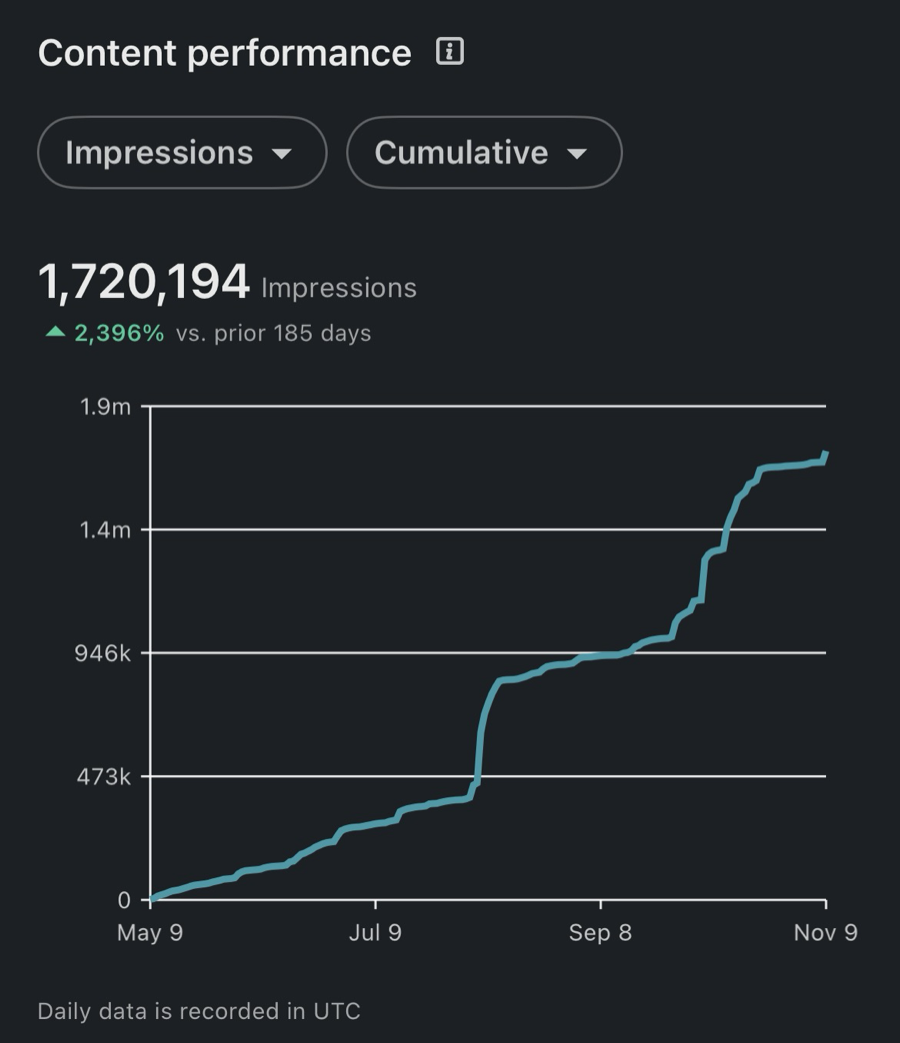
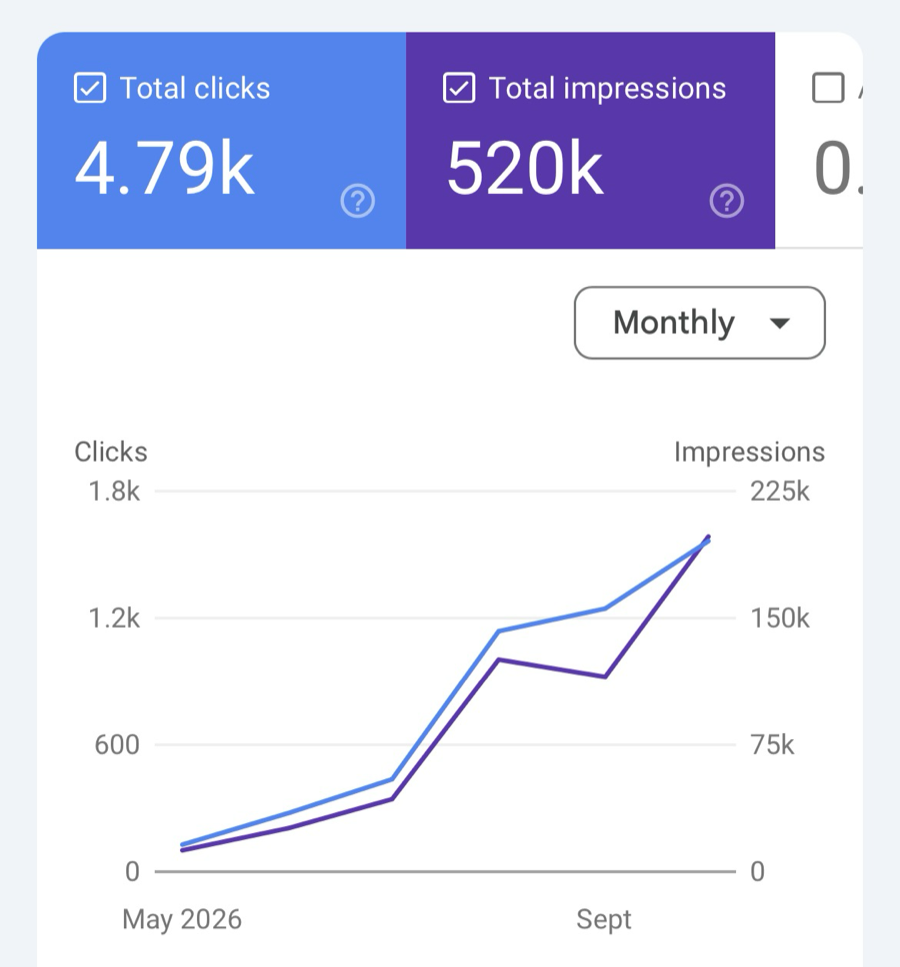
Six months of stats, from the product Luros was built from
These are Delphina's numbers, from delphina.money. Delphina is a Minith Labs product that Luros was built from, so the screenshots beside this claim are its Search Console and its LinkedIn, not a client's and not ours.
One product, so one set of numbers. What it shows is that the machinery works: it found the pages, it read the data, it kept the site in the index. A client's site is a separate project with its own data, and the numbers that matter for a client are that client's own numbers, which Luros writes into their project where they can read them.
1,720,194
content impressions
520,000
impressions in search
The samples are being produced on our own site
This is what the routine writes in a client's project. It reads that client's own Search Console and it drafts the changes, and you review before anything goes to the client.
Not published yet.
gsc-keyword-harvestingNot published yet.
ai-visibility-checkThe boundary
An assistant you can rely on, not a team that replaces your judgement.
Luros does the repeatable checks and drafts the work. You decide what goes to a client, and the client relationship stays yours.
The licence
One subscription. Up to 10 sites. Your clients stay yours.
Your own site is one of the 10
It is a site like any other, not an extra on top of the client sites. There is no seat count: the people you employ to run it are not counted.
Each client site is its own project
With its own data, its own accounts and its own keys. Nothing is shared between client projects, and nothing from one client’s project reaches another.
The client sees everything
The kit is a set of files in the client’s own repository, running on a schedule against the client’s own data. Nothing is hidden from them.
You cannot resell it
The subscription is for the sites you work in. If a client wants their own Luros, they buy their own, at the same price for the same number of sites.
The full terms are short, and we send them before you buy anything: email us and we will send the agency licence to read, with the price and the site count on it.
Luros says it is not an agency, and that is still true: there is no strategist, no account manager and no retainer on our side. It is software you run yourself, which is what makes it usable on ten client sites at once.
Questions
Questions agencies ask.
What does the price cover?
£499 a month per module, for up to 10 sites on one subscription, and your own site counts as one of them. There is one agency price. Each site is its own project, with its own data.
Is the ninety-day guarantee included?
No. The guarantee comes with the single-site licence. The agency licence is priced for ten sites, and its terms do not carry it.
Is it hosted?
No. It is a command you run in each client’s own project, with that client’s own accounts and keys.
Which tools does it work with?
The harnesses Luros installs into: Claude Code, OpenCode, Codex, GitHub Copilot, Cursor, Gemini CLI, Windsurf, Pi, Hermes and Claude Cowork.
Who approves the work?
You do. Luros drafts and proposes; nothing reaches a client because Luros decided it should.
Will it touch our clients’ ad accounts?
It reads them, and only if the client has given the project a read-only connection or drops the campaign exports in. It never changes a budget, never pauses a campaign and never publishes an ad. The spend stays yours, and every change waits for you.
Can we run it on our own site as well?
Yes. Your own site is one of the 10, not an extra on top of them.
Do we need a licence for each client?
No. One subscription, one key, and the kit installed in the project for each site you work in. There is no seat count either: the people you employ to run it are not counted.
Can a client run it themselves?
Not under your key. If a client wants their own Luros, they buy their own subscription, at the same price for the same number of sites. Handing them your key and calling it theirs is not something the licence covers.
What does the client see?
Everything. The kit is a set of files in the client’s own repository, running on a schedule against the client’s own data. Nothing is hidden from them.
What happens to a client project if we stop subscribing?
The files they have keep working. Installed files never check the key, so nothing in their project stops working. The key is checked only when somebody installs or updates the kit, so what ends is the next install or update.
Will you contact our clients?
No. Nobody from Minith Labs approaches your clients, and nothing in the kit does either. A client’s site in a case study, or a number in a benchmark, is used only if you say so.
Tell us how many sites you run.
We reply by email with the agency terms and the next step.