
Your customers ask Google and ChatGPT, and get somebody else
Meet Luros, your new AI marketing agent
Luros is an AI marketing agent that runs inside your own project: agents, playbooks and routines that put search, answer engines and conversion on autopilot, against your own site and your own analytics.
It is not a chat wrapper, not a runtime, not a code generator, not an agent framework, not a hosted service, not an agency and not the thing that spends your money.
£99 a month, per module Every module can be tried free for seven days. Take the ones you need. Each one carries its own ninety-day guarantee, measured in your own tools.

The problem
Three things are quietly costing you customers.
Nobody finds you
Your customers are searching for you and getting somebody else. You are not on the page, so you are not in the choice.
AI will not mention you
Somebody asks ChatGPT or Claude what solves their problem, and it names your competitors. It does not name you.
They find you and leave
The traffic arrives and the page does not close. Nobody worked out which page type was losing the people who came.
The proof
What it does for a founder
It will be published here when the numbers are in: the period, the baseline, the outcomes, the routines that moved each number, and what correlation does and does not show. We would rather say that than print a number we cannot stand behind.
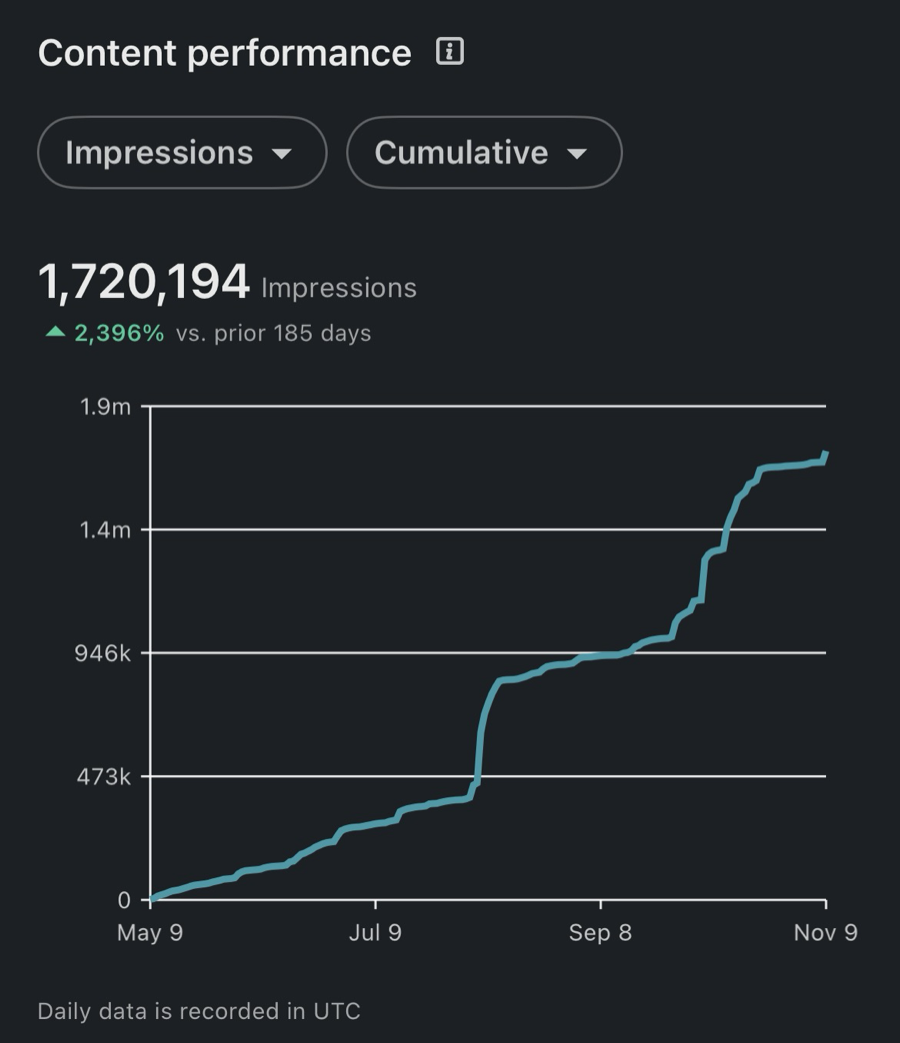
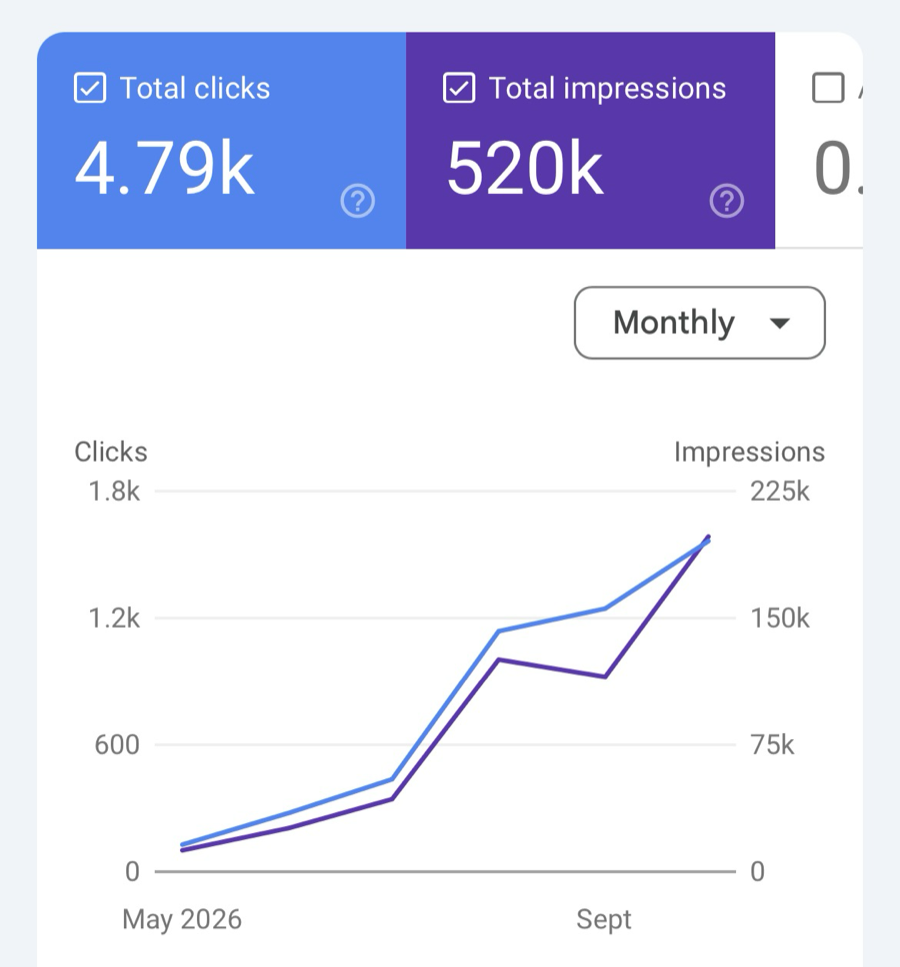
Six months of stats, from the product Luros was built from
These are Delphina's numbers, from delphina.money. Delphina is a Minith Labs product that Luros was built from, so the screenshots beside this claim are its Search Console and its LinkedIn, not a customer's and not ours. No agency retainer and no media budget. These figures show what the work Luros was built from produced for one product; they are not a claim about what Luros will do for yours.
1,720,194
content impressions
520,000
impressions in search
The samples are being produced on our own site
Two real artifacts, from our own runs: a day of the Search Console routine, and a week of the AI visibility check. We publish them when they exist. We would rather leave a gap than print a report that was never run.
Not published yet.
gsc-keyword-harvestingNot published yet.
ai-visibility-checkIt runs in your project. You approve the parts that matter.
Model usage runs on your own subscription, not on ours.
It runs on your schedule. The routines run daily and weekly, in your harness, on your own model subscription. What reaches a customer lands in review first, and you approve it.

It finds where you are invisible to AI.
Whether ChatGPT, Claude, Gemini and Perplexity recommend you, which sources they cite instead, and what would change their answer.
It reads your Search Console and picks the work.
Not a report. The five highest-impact pages, changed, and put up for your review.
It checks whether the traffic converts.
Which page types bring people who buy, which bring people who do not, and what to change about the ones that do not.
The word on the button
An AI marketing agent does the marketing on a schedule. This one runs inside your own project.
The category
Software that does marketing work on a schedule, without a person prompting it each time: it reads a site and its analytics, decides what to change, makes the change and checks what happened. Most of it is a hosted product you subscribe to, and the work happens in its own product.
Several products answer to that phrase, and this site compares Luros against the ones a founder would buy instead of hiring an agency. Every price and every feature claim on those pages is taken from the vendor's own pages, with the date it was checked.
Luros, inside it
An AI marketing agent that runs inside your own project, on your own model subscription, with your own accounts and your own keys. It reads a site, decides what to change, makes the change and checks what it did. It is not a person, and it does not replace judgement.
It reads a site, decides what to change, makes the change and checks what it did. It is not a person, and it does not replace judgement: every routine states how far it may act without you, and none of them may reach a customer on its own.
There are three ways to pay for this work: buy an AI marketing agent, hire an agency, or hire a person to do it. Luros is the first, it is the cheapest of the three and it needs no recruitment. It is not a substitute for a marketing hire in the sense of being one. It is a way of doing the work a marketing hire would be hired to do, without the hire.
What is inside
twenty-six agents, twenty-nine routines and twenty-one playbooks.
25 of the routines are marketing. The rest keep your product healthy: errors, issues, testing and security advisories. Every one of them is a file in your project, with a schedule you set.
26
Agents
- Roles an AI agent plays, each with its own remit and voice.
- The growth, content, product and engineering roles a marketing team needs.
29
Routines
- Jobs that run again and again, on a schedule you set.
- 25 of them are marketing. The rest keep your product healthy: errors, issues, testing and security advisories.
21
Playbooks
- Jobs that run once, end to end.
- The home page, the launch, the social week, the paid media and the measurement.
29 routines in all. Twenty-five of them are marketing. Every one states how far it may act without you. None of the twenty-nine may reach a customer on its own.
The twenty-six agents
Roles an AI agent plays, each with its own remit, voice and standards.
-
Business Operations Manager
biz-opsthe metric set, and what the numbers should change -
Business Experimenter
business-experimenternew business ideas, and whether they are worth a week -
Founder
ceowhat gets built first, and the calls nobody else makes -
Community Lead
community-leadthe community: where it lives, and how it is run -
Content & Brand Lead
content-branduser-facing copy, and one voice across every channel -
Chief Technology Officer
ctotechnical direction, architecture, and what a trade-off costs -
Customer Performance Lead
customer-performancecustomer health, retention, and the churn risk -
Design & Delight Lead
design-delightthe interface, the visual system, and the delight -
Infrastructure & Deployment Specialist
devopsdeployment, monitoring, backups, and staying available -
Frontend Engineer
frontend-engineerbuilding the interface, and making it fast -
Growth Lead
growththe growth framework, the experiments, and the next lever -
Go-To-Market Lead
gtm-ownerthe go-to-market plan, the channels, and the launch -
Customer Research Lead
icpwho the product is for, tested against reality -
Market Strategy Synthesiser
market-strategy-synthesizercompetitors, and a position worth defending -
Motion Designer
motion-designervideo and animation: the cut, the camera, the pacing -
Motion Editor
motion-editorthe build, the polish, the export -
Paid Media Lead
paid-mediathe paid media plan, the creative, and what the spend returned -
Partnerships Lead
partnershipsintegrations, agent surfaces, marketplaces, agencies and affiliates -
Product Manager
product-managerwhat gets built next, and what gets cut -
Publicist
publicistmedia relations, the pitch, and the coverage -
Security Researcher
security-researcherfinding vulnerabilities, and writing findings somebody can fix -
Narrative Visual Designer
storytellerthe visual idea, the type, and the grid -
Tech Team Lead
tech-teamsequencing the engineering work, and routing it -
Test Manager
test-managerwhether the work is actually done, and the coverage -
Version Control & Collaboration Specialist
version-controlcommits, branches, merges, and cutting a release -
Voice Over Artist
voice-over-artistthe read, the script, and the voice standards
The twenty-one playbooks
Jobs that run once, end to end.
-
Ad creative playbook
ad-creativeA slate of ad creative from the angles the evidence supports: every headline inside its platform limit, every concept carrying a hypothesis that can lose. -
Paid media playbook
adsDecide what the paid media is for, which platform carries it, how the budget splits and what every campaign is judged on, before the money is spent. -
Agent surfaces playbook
agent-surfacesMake the product legible to an AI agent: the catalogue it reads, the contract it calls, the documents it quotes and the listings it is found in. -
App store playbook
app-storeWork the app store listing end to end: the title, the subtitle, the keywords, the screenshots and the description, judged against the competing listings. -
Co-marketing playbook
co-marketingFind the partners whose audience overlaps the project's, work out who does what and who gets what, and put the campaign together without either side carrying the other. -
Conversion playbook
conversionWork the whole conversion path end to end, from the offer to the first run, and prove every change on the numbers rather than on the feeling. -
Creators playbook
creatorsFind the creators who already reach the audience, work out what each one is worth and what to buy, and write the brief that both sides can hold to. -
Delight playbook
delightGive a public site a signature, something unexpected and on brand on every page, with feedback on every action and motion, off for anyone who asks. -
Events playbook
eventsDecide which events are worth the money, run the one that is, and get the follow-up into pipeline. -
Go-to-market plan
gtm-planWrite the plan that decides what the marketing money does for the next two quarters, so nobody has to invent it in a hurry. -
Home page playbook
homepageBuild or review a home page against what decides whether a first-time visitor stays: the hero, the story, the navigation, and speed on a phone. -
Launch playbook
launchRun one launch end to end on Product Hunt, Hacker News, niche directories and newsletters, with a next step for everyone who arrives and a measured result. -
Marketing department
marketing-departmentA marketing department: fourteen roles, what each one owns, who it answers to and what it hands up, built from the kit's existing agents. -
Measurement playbook
measurementConnect PostHog, agree which events count as a conversion, and capture the baseline the routines compare against, so they read numbers, not guesses. -
Offers playbook
offersWork out what the offer actually is: what the customer gets, what it is worth, what is in the way, and what happens if it does not work. -
Positioning playbook
positioningWrite down what the product is for, who it is for and what it is instead of, in one place every agent reads. -
Proof library
proof-libraryKeep every number, result and customer outcome the product claims as a proof card with its method and source, so each claim is traceable and can be changed in one place. -
Search and conversion playbook
seoStand up programmatic SEO on a product: comparison pages, round-ups, hub-and-spoke pages, and the conversion layer on top. -
Social week playbook
socialProduce one week of posts for every channel the project posts on, every figure checked against a source and every post audited, then write down the lesson. -
Video playbook
videoMake one film from a topic: the script, the cut, the build, the export and the check, ending with a file a person has watched. -
Waitlist and invite queue playbook
waitlistRun a waiting list as an invite queue: show everyone where they stand, give them a link that moves them up, and never state a number that is not true.
The twenty-nine routines
Jobs that run again and again, on a schedule you set.
-
Agent surface check
agent-surface-checkTest the product the way a customer's AI agent meets it, through its MCP server, connectors and llms.txt, and record whether the agent finishes the task. -
AI visibility check
ai-visibility-checkFind out whether AI assistants recommend the product, which sources they cite, and what would change their answer. -
Channel ledger
channel-ledgerWrite down, once a month, what every channel cost, how many customers it brought, and whether they stayed, so channels are kept or stopped on evidence. -
Channel map
channel-mapEach quarter, map every channel by funnel stage, find where a competitor wins the customer, and choose the next two channels. -
Community review
community-reviewRead the rooms the project is in every week: who is new, what went unanswered, what the rules asked for, and what a post that went wrong needs, and put the replies back. -
Conversion rate optimisation
conversion-rate-optimisationCompare page types on their visit-to-conversion rate, find the worst quartile, and ship a copy or layout fix for it. -
Creative queue
creative-queueTurn the paid media verdicts into the next week's ad concepts, so a TEST verdict produces a slate that can be read rather than a note nobody acts on. -
Customer journey review
customer-journey-reviewRead the journey a customer actually takes, from the first run to the renewal, and name the step where they leave. -
Exploratory testing
dogfood-testingBlack-box exploratory testing of the running app, with video, console errors and a running issue log. -
Fact routing
fact-routingEach week, find every page still stating an old, retired or overdue claim, and change it to what the proof library says now, for review. -
Founder and team posts
founder-voiceDraft posts for the founder and team on the platforms customers read, learn from every edit, and turn followers into subscribers the company owns. -
GitHub issue triage and resolution
github-issue-triageRead the repository's open issues, close the ones that can be closed, and do the work on the ones that need it done. -
Search keyword harvesting
gsc-keyword-harvestingThe daily search autopilot: harvest keyword opportunities from Search Console and make the page changes, which land in review for you to approve. -
Internal linking
internal-linkingFind the internal links a site is missing, from the queries its own pages already rank for, and propose them for approval before anything is written. -
Link building
link-buildingFind the links the project should have and does not, make the assets worth linking to, and keep the record of what was asked and what came back. -
Newsletter review
newsletter-reviewRead the list every week: who joined, who stopped opening, which issue earned the click, and what the next issue does differently. -
Market scanner
ongoing-market-scannerWatch the market for new competitors, complaints and news, and turn what it finds into briefs somebody can act on. -
Organic conversion review
organic-conversion-reviewPut search and conversion side by side per page type, so a search change is judged on the people who converted, not the clicks. -
Original statistics
original-statisticsPublish one statistic only this product can produce, from anonymised aggregate data, with its method, so it can be cited. -
Paid media review
paid-media-reviewRead the project's ad exports every week, judge every campaign against what it actually cost, and draft what to hold, what to fix and what to test. -
Partner prospecting
partner-prospectingFind the creators, newsletters, podcasts, partners and agencies customers already trust, check the fit, and draft outreach a person sends. -
Daily error check
posthog-error-checkRead the day's errors, resolve what can be resolved, file what must be fixed, and write the report. -
Referral review
referral-reviewRead the referral programme every month: what was recommended, what was earned, what it cost, and whether it is still the right loop. -
Review and referral presence
review-presenceKeep the product's review-site and marketplace listings current, draft honest replies to new reviews, and ask happy customers for a review. -
Security advisory check
security-advisory-checkRead Cloudflare Radar's Zero Wire, match every briefing against what the project actually runs, and file the findings that need action. -
Search and answer-engine audit
seo-auditAudit the site for search and answer-engine problems, and make the fixes in review rather than filing them. -
SMS review
sms-reviewRead the messages the project sends every month: what it was allowed to send, what it sent, what came back, and whether it is still allowed to send it. -
Social week
social-weekWrite the week's posts across every channel the project posts on, hold every figure to a source, and write down what each week settled. -
Video pipeline
video-pipelinePlan the scenes, cut the month's videos, watch each cut against the plan, and score every piece against the last, so the channel learns.
Your first week
What the engineer does while you are building.
The Search Console routine reads your own site and the pages you rank for, and writes down the changes it would make.
gsc-keyword-harvesting
The daily error check reads the day's errors from your analytics, fixes what it can fix, and files what it cannot.
posthog-error-check
The AI visibility check asks ChatGPT, Claude, Gemini and Perplexity about your product, and records what they said and which sources they cited.
ai-visibility-check
The channel map and the channel ledger work out which channel is worth your next hour, and what it has already earned.
channel-map
The conversion review looks at the page types people arrive on, and says which ones are losing the people who came.
organic-conversion-review
Nothing runs. The routines and the notes from the week are there for you to read.
The founder-voice check reads what the week produced and says whether it sounds like you.
founder-voice
Before you have traffic.
Before you have traffic.
Four of the twenty-nine routines need traffic, and those four are the ones that harvest it. The other twenty-five, and the whole search playbook, work on a site that has not been found yet. The playbook builds pages against other companies’ demand rather than yours, so it does not need your own traffic to start. The answer engine check asks ChatGPT, Claude, Gemini and Perplexity whether they recommend you, which is a question you can ask before anyone has clicked anything. The original statistics routine publishes a figure only your product can produce, with its method, so that other people can cite it. The channel map asks which stage has no channel, which is a pre-traffic problem rather than a post-traffic one.
- The search playbook builds comparison and round-up pages against other people’s brand demand.
- The answer engine check asks four assistants whether they recommend you, and which sources they cite instead.
- The original statistics routine publishes a citable figure with its method.
- The channel map works out which stage has no channel, and picks the next two.
- The launch playbook and the partner prospecting routine need nothing from your site at all.
Two of them do need something from your side. The original statistics routine needs a product with users, so a brand new product cannot use it yet, and the conversion routines need enough traffic to read a rate. If you have neither, the rest still runs.
The comparison
Against what you were going to pay
| Luros | An agency | A marketing hire | Build it yourself | |
|---|---|---|---|---|
| What it costs | £99 a month per module, plus your own model subscription and the time to review its changes. Agencies pay £499 a module for up to ten client sites. | £799 a month is the median of 45 published UK SEO prices (June 2026); Whito's October re-read of the 38 it could compare put the median at £837.50. A single-channel retainer runs £1,250 to £3,500, and full service £3,500 to £16,750 | £4,000 to £5,000 a month | Your own hours, plus the tools and the model subscription on your own account. At a hire's rate, one person's month is £4,000 to £5,000 (Equinode, checked 11 November 2026). |
| When it runs | On a schedule, against your own site | When you brief it | When you ask them | When you remember to run it |
| Time to reach parity | One command, once Search Console and analytics are connected | You brief it, and it starts | You hire them, and they start | 26 agents to design, 29 routines and 21 playbooks to write and test, and to keep working as answer engines change |
| What it covers | One module at a time: SEO / GEO, Social Content, Paid Media, Conversion Optimisation, Lifecycle Marketing or 3rd Party Distribution | Whatever you pay for | One skill set | Whatever you build |
| Who is in the loop | You, on the consequential changes | A strategist | A strategist | You, for all of it |
| What you do not get | Paid ads, cold email and a strategist. The reviews are yours. | The skills you did not pay for | The skills you did not hire | Updates as the harnesses and answer engines change, and tested review guardrails |
A UK single-channel retainer runs £1,250 to £3,500 a month and full service £3,500 to £16,750. Whito's June 2026 read of 45 published UK SEO prices puts the median at £799, with half between about £410 and £1,500; its October re-read of the 38 it could compare put the median at £837.50. One mid-level marketing manager costs £4,000 to £5,000 a month with employer costs, and covers one skill set. Neither of them is reading your Search Console at six in the morning. The figures are UK figures in pounds, not converted.
- Whito: marketing retainer cost UK 2026, checked 11 November 2026.
- Equinode: digital marketing agency costs in the UK, 2026, checked 11 November 2026.
Where the agency and salary figures come from: what a marketing agency costs. Weighing Luros against the other AI marketing tools instead: the comparisons, each one sourced and dated.
The offer
£99 a month, per module. Take the ones you need.
£99 a month, per module
One founder, one product, one site. Cancel any month. Agencies pay £499 a module for up to 10 client sites.
| Module | What it does | A month | Guarantee |
|---|---|---|---|
| SEO / GEO | The pages that answer a question, the audit that finds the ones that do not, the harvest that turns a query into a page, the links that say the page is worth citing, and the measurement every later module is judged against. | £99 | Ninety days, measured, measured in Google Search Console |
| Social Content | The week of posts and the video it is made of, the rooms the project is in, the list it writes to, the messages it sends, and the creators whose audience already has the problem. | £99 | Ninety days, delivered, measured in the channels' own counts |
| Paid Media | The plan, the account structure, the budget split, the creative, the weekly reading of what the campaigns actually cost, and the queue that turns a test verdict into the next set of concepts. | £99 | Ninety days, at the target, measured in your ad account |
| Conversion Optimisation | The offer, the page, the form, the signup, the first run, and the launch that points at all of it. The measurement of what each one does and the test that changes it. | £99 | Ninety days, measured, measured in your own analytics |
| Lifecycle Marketing | The journey a customer actually takes, the step where they leave, the review programme that proves the product is worth saying, and the referral loop that turns a happy customer into the next one. | £99 | Ninety days, measured, measured in your own analytics |
| 3rd Party Distribution | The partners whose audience overlaps the project's, the joint campaigns, the store listing, and the files an assistant reads when it looks for a product to recommend. | £99 | Ninety days, opened, measured in your own records |
- Each module installs into your own project: the agents, the routines, the playbooks and the skills they need.
- It comes from the store, not from this site: subscribe to the module, download it from your account, and install it into the client you already use.
- The starter plan comes with every module, because it is what decides which work runs.
- Your own Search Console and analytics, read directly.
- It runs in your own project, in your harness, and the model calls are on your own subscription.
- Every change that reaches a customer lands in review first, so you approve it before it does.
Try it free for seven days
Every module has a seven-day trial on the store. No card, and nothing is charged unless you subscribe afterwards. It covers one project, which is one site or repository, and the marketing plan and the engineering work are free there with no end date.
It is the module itself, for seven days. The same agents, routines and playbooks, run by your own harness, on your own model subscription, against your own site.
What it is not. It is not a licence you keep. It lasts seven days, and then it is over: the trial stops, and what it has already changed on your site stays. And it is not a summary of the module.
How you install it
- Subscribe to the package.
- Open the dashboard and open My Skills.
- Request the download. You get a short-lived signed link.
- Install the package into the AI client you already use.
- Follow its SKILL.md: it says what to set up first and what to run.
Ninety days, measured, module by module
SEO / GEO. If Search Console counts no more organic Google clicks to your site in days 63 to 90 than in the 28 days before your install, we refund the months you have paid for.
Social Content. If any week of the ninety goes by without a post published on every channel the project posts on, we refund the months you have paid for.
Paid Media. If the campaigns the kit wrote finish the ninety days above the cost per acquisition the plan set, we refund the months you have paid for.
Conversion Optimisation. If the page types the kit changed convert no better in days 63 to 90 than in the 28 days before your install, we refund the months you have paid for.
Lifecycle Marketing. If the cohort that started after your install reaches the outcome event no more often than the cohort before it, we refund the months you have paid for.
3rd Party Distribution. If no named partner conversation is started and no joint campaign written in the ninety days, we refund the months you have paid for.
We take the before and the after ourselves, in your own project, so the comparison is one you can check rather than one you have to believe. Email contact@minithlabs.com with the word "refund" and the name on your subscription.
The files already in your project keep working. A refund ends the subscription; it does not reach into your repository.
What the monthly fee buys
The kit stays in step with the harnesses. Ten harnesses are supported and each one's agent format is kept current. When OpenCode changes its permission model or Gemini tightens its schema, the kit follows, and `luros sync` re-renders your project without touching anything you changed.
The routines keep working against a moving target. The answer engines change how they cite and Google changes what ranks, so every routine is a thing that has to be kept working. The month you pay for is the month it is kept working.
Request an invite
The invite is how the first founders come in, and how we find out what to build next. It is not the only way in: you can try any module free for seven days first.
The questions
Questions people ask.
- Do I need traffic before Luros is worth it?
- No. Four of the twenty-nine routines need traffic and twenty-five do not. The search playbook builds pages against other people’s demand rather than yours, the answer engine check asks ChatGPT, Claude, Gemini and Perplexity whether they recommend you, the original statistics routine publishes figures other people can cite, and the channel map asks which stage has no channel. The four that need traffic are the ones that harvest it.
- Does it work with a site on a CMS, like WordPress or Webflow?
- It works if your CMS reads from a git repository, because the kit changes files in a repository and opens a pull request for you to apply. That covers Netlify CMS, TinaCMS and git-backed WordPress. For a CMS that does not read from git, the routine does the work and the change is yours to paste in, and we would rather say that than imply it publishes on its own.
- How much of my time does it take?
- One setup, and then the deploy. You answer the questions once, set the schedule once, and the routines run unattended. What comes back to you is the production deploy to approve, and nothing reaches a customer without it.
- Is it for a founder who is not technical?
- No, and it says so on this page. Luros installs files into a project and your own coding assistant runs them, so it needs a repository and a harness you already use. It is not a hosted service and there is no account manager.
- What is Luros, in one sentence?
- It is an AI marketing agent that runs inside your own project: agents, playbooks and routines that put search, answer engines and conversion on autopilot, against your own site and your own analytics.
- Does Luros change my website without me?
- No. Every change that reaches a customer lands in review first, so you approve it before it does. The routines read, write and open the pull request on their own, and the production deploy is yours.
- What does the ninety day guarantee cover?
- Each module carries its own ninety-day guarantee, measured in the tools you already have: Search Console for SEO / GEO, your own analytics for Conversion Optimisation and Lifecycle Marketing, your ad account for Paid Media, the channels' own counts for Social Content, and your own records for 3rd Party Distribution. If the module has not moved its number by day ninety, you do not pay for that module. We take the before and the after ourselves, in your own project, so the comparison is one you can check rather than one you have to believe.
- How much does it cost compared with a marketing hire or an agency?
- Luros is 99 pounds a month per module for one founder, one product and one site, and you take the modules you need. Most businesses pay an agency 500 to 1,500 pounds a month, with a 799 pound median, and one mid-level marketing manager costs 4,000 to 5,000 pounds a month with employer costs. Those are UK figures, checked on 11 November 2026.
- What happens if I stop paying?
- The files already in your project keep working. A refund ends the subscription and does not reach into your repository. What ends is the licence key, so a new install would not open.
- Does Luros run my ads or send my cold email?
- It plans your ads, writes the creative and reads what the campaigns cost, but it never changes a budget, a bid or a campaign's status, and it never spends your money. And it sends no cold email. There is no strategist, no account manager and no retainer behind it.
The boundary
What it is not.
- Not a chat wrapperThere is no conversation to keep having; the work is files in your project, and it ships.
- Not a runtimeIt installs the agents and the routines; your harness runs them, on your machine or your CI.
- Not a code generatorIt writes agent definitions, not application code.
- Not an agent frameworkThere is no framework to adopt and no API to call; the kit is a set of files and one command.
- Not a hosted serviceIt is a command you run in your own project root, with your own accounts, your own keys and your own model subscription.
- Not an agencyThere is no strategist, no account manager and no retainer.
- Not the thing that spends your moneyIt plans the paid media, writes the ad creative and reads what came back; it reads an ad account when the project has a read connection to one, and it never changes a budget, never pauses a campaign and never publishes an ad or a post.
Who it is for
A technical founder already shipping with an AI coding agent that Luros installs into, who has no time for marketing.
This is not for you if you have no repo, if you use none of Claude Code, OpenCode, Codex, GitHub Copilot, Cursor, Gemini CLI, Windsurf, Pi, Hermes or Claude Cowork, or if you would rather somebody else carried the model costs.
Supported harnesses
- Claude CodeAnthropic's agent in your terminal
- OpenCodeThe open-source agent in your terminal
- CodexOpenAI's agent in your terminal
- GitHub CopilotGitHub's agent in your terminal
- CursorCursor's agent in your editor and its CLI
- Gemini CLIGoogle's agent in your terminal
- WindsurfCascade, in the Windsurf editor
- PiThe open-source agent toolkit
- HermesNous Research’s agent
- Claude CoworkAnthropic’s agent in Claude Desktop